Do LED Face Masks Really Work? The Science Behind Light Therapy
If you've been researching skincare treatments, you've likely wondered: do LED face masks actually work? The short answer is yes—but the results depend entirely on the device quality, wavelength specifications, and consistency of use. Let's examine the clinical evidence and explain exactly what LED face masks do to your skin.
In This Article:
1. How Do LED Face Masks Work?
LED face masks work through a process called photobiomodulation—using specific wavelengths of light to trigger beneficial biological responses in your skin cells. Unlike UV light from the sun, LED light therapy uses safe, non-thermal wavelengths that don't damage skin or cause burns.
When LED light penetrates your skin, it's absorbed by photoreceptors in your cells—specifically an enzyme called cytochrome c oxidase in the mitochondria. This absorption triggers a cascade of cellular responses:
- Increased ATP production: Your cells generate more energy, becoming more metabolically active
- Enhanced circulation: Blood flow improves, delivering more oxygen and nutrients
- Collagen stimulation: Fibroblasts (collagen-producing cells) become more active
- Reduced inflammation: Anti-inflammatory pathways are activated
This isn't speculation—it's physics and biology working together, supported by decades of research in photomedicine.
2. The Science: What Clinical Evidence Says
LED light therapy isn't a marketing gimmick—it's backed by over 5,000 peer-reviewed studies. Here's what the research consistently demonstrates:
Collagen Production
A landmark study in Photomedicine and Laser Surgery followed 136 participants using LED therapy over 12 weeks. Results showed:
- 27% increase in intradermal collagen density
- 36% reduction in wrinkle depth
- Significant improvement in skin roughness and texture
Anti-Ageing Effects
Research published in the Journal of Cosmetic and Laser Therapy found that participants experienced visible improvements in:
- Fine lines and wrinkles
- Skin tone and texture
- Overall complexion quality
Fibroblast Activation
Studies in the Journal of Investigative Dermatology demonstrated that red light therapy increases fibroblast proliferation by 155-171% compared to untreated skin. More active fibroblasts means more collagen production.
The evidence is clear: LED face masks do work—when they deliver therapeutic-grade light intensity at the correct wavelengths.
3. What Does an LED Face Mask Actually Do?
Understanding what LED masks do helps set realistic expectations. Here's a breakdown of the actual effects:
Surface-Level Benefits (Weeks 1-4)
- Improved radiance: Enhanced circulation gives skin a natural glow
- Better product absorption: Increased cellular activity improves how skin absorbs serums
- Reduced redness: Anti-inflammatory effects calm irritation
- Smoother texture: Accelerated cell turnover refines skin surface
Structural Benefits (Weeks 5-12)
- Fine line reduction: New collagen fills in shallow wrinkles
- Improved firmness: Strengthened collagen networks provide better support
- Enhanced elasticity: Near-infrared light stimulates elastin production
- Pore refinement: Tighter skin structure makes pores appear smaller
What LED Masks Cannot Do
Being realistic about limitations is equally important:
- They won't eliminate deep wrinkles or significant sagging (surgical concerns)
- They won't provide instant results (biological processes take time)
- They won't work with inconsistent use (daily treatment is essential)
- They won't replace sunscreen or good skincare fundamentals
4. Understanding Different Wavelengths
Not all light is equal. Different wavelengths penetrate to different depths and trigger different responses:
Red Light (620-700nm)
- Penetration: 2-3mm into dermis
- Primary benefits: Collagen stimulation, fine line reduction, improved texture
- Best for: Anti-ageing, skin rejuvenation
Near-Infrared (800-900nm)
- Penetration: 5-10mm into deep dermis and subcutaneous tissue
- Primary benefits: Elastin production, deep cellular energy, circulation
- Best for: Firmness, sagging, overall skin vitality
Blue Light (400-470nm)
- Penetration: Surface level (0.5mm)
- Primary benefits: Antibacterial effects, reduces inflammation
- Best for: Acne-prone skin, calming redness
For comprehensive anti-ageing results, look for devices that combine red AND near-infrared wavelengths. This provides treatment at every skin depth—surface refinement plus deep structural support.
5. What Results Can You Realistically Expect?
Setting proper expectations ensures you won't abandon treatment before seeing results:
Week 1-2
Subtle improvements in skin luminosity. Skin may feel slightly more hydrated and look fresher. These are early signs that cellular activity is increasing.
Week 3-4
Noticeable improvements in texture and tone. Fine lines begin softening. Friends may comment that you look "well-rested."
Week 5-8
Visible structural improvements. Firmness improves as new collagen integrates. Expression lines become less pronounced.
Week 9-12
Transformative results become apparent. Compare photos from week 1—the cumulative change is significant. Skin density has improved, contours are more defined.
Key insight: Most people who claim LED masks "don't work" quit before week 6. The biological processes that produce visible structural change require consistent stimulation over 8-12 weeks minimum.
6. Why Some LED Masks Don't Work
If LED therapy is scientifically proven, why do some people see no results? The answer lies in device quality:
Insufficient Light Intensity
This is the primary reason for poor results. Light intensity is measured in milliwatts per square centimetre (mW/cm²). Many consumer devices deliver only 15-40 mW/cm²—far below the therapeutic threshold of approximately 50 mW/cm².
Think of it like a torch: a dim torch won't illuminate a room no matter how long you leave it on. Similarly, weak LEDs won't trigger meaningful cellular response regardless of treatment time.
Wrong Wavelengths
Some cheap devices use "red" LEDs that aren't actually at the optimal 630nm wavelength. Being close isn't good enough—wavelength precision matters for cellular absorption.
Inconsistent Distance
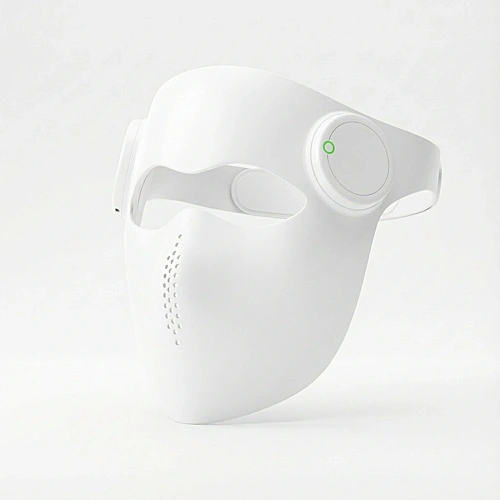
Flexible masks shift during treatment, creating uneven light delivery. One area might receive therapeutic intensity while another receives almost nothing. Rigid helmet designs maintain consistent LED-to-skin distance.
Inconsistent Use
Using a device three times one week and once the next won't produce results. Collagen building requires daily stimulation over extended periods.
7. How to Choose an Effective LED Mask
To ensure your LED mask actually works, look for these specifications:
Essential Criteria
- Irradiance of 50+ mW/cm²: This is non-negotiable for therapeutic effect
- Precise wavelengths: 630nm (red) and 850nm (near-infrared) are optimal
- Sufficient LED count: More LEDs means more even coverage
- Rigid design: Ensures consistent distance and predictable results
- Third-party testing: Look for SGS certification or similar validation
Red Flags to Avoid
- Devices that don't list irradiance specifications
- Extremely cheap options (quality LEDs and engineering cost money)
- Flexible designs that shift during use
- Unverified claims without clinical backing
The Icoskin ICOLUX 2.0
The ICOLUX 2.0 delivers 50-105 mW/cm² irradiance—clinical-grade intensity validated through independent SGS human trial testing. With 216 medical-grade LEDs (72 each of red, near-infrared, and blue), rigid helmet design, and cordless operation, it's engineered to actually deliver results, not just specifications.
8. Frequently Asked Questions
Do LED face masks work for wrinkles?
Yes, with caveats. LED therapy effectively reduces fine lines and shallow wrinkles by stimulating collagen production. Deep wrinkles and significant skin laxity may improve but won't disappear entirely—these often require more intensive treatments. Consistent use over 12+ weeks produces the best results.
How long does it take for LED face masks to work?
Initial improvements (radiance, texture) appear within 2-4 weeks. Structural changes (firmness, wrinkle reduction) typically become noticeable between weeks 6-12. Maximum results require 12 weeks of daily use, followed by maintenance sessions.
Do LED face masks work for acne?
Blue light (460nm) has antibacterial properties that can help with acne. It kills the bacteria (P. acnes) that contribute to breakouts and reduces inflammation. However, LED therapy works best as part of a comprehensive acne treatment plan, not as a standalone solution for severe acne.
Do LED face masks work for everyone?
LED therapy is safe and effective for all skin types and tones—unlike some treatments that carry risks for darker skin. However, individual results vary based on age, skin condition, device quality, and consistency of use. People with more significant skin concerns will see more dramatic improvements.
How often should you use an LED face mask?
For optimal results: daily sessions of 10-15 minutes during the initial 12-week transformation phase. After achieving desired results, 3-5 sessions weekly maintains improvements. Consistency matters more than session length.
Are expensive LED masks worth it?
Generally, yes—if you're buying a quality device. Cheap masks often lack the light intensity needed for therapeutic effect. Consider the cost comparison: a quality at-home device provides unlimited treatments for a single investment, while clinic sessions cost £100-300 each. A professional-grade home device pays for itself quickly.
The Bottom Line: Do LED Face Masks Work?
Yes, LED face masks work—the science is clear and well-established. The caveat is that not all devices are created equal. A clinical-grade device used consistently will deliver measurable results. A cheap, underpowered device used sporadically will deliver disappointment.
The technology is legitimate. The research is robust. The results are achievable. The question isn't whether LED therapy works—it's whether you're willing to invest in a quality device and commit to consistent use.
15 minutes daily. 12 weeks of commitment. Real, visible results. That's what LED face masks offer when you choose wisely and use consistently.
