LED Face Mask Colours Explained: What Each Light Does for Your Skin
LED face masks come with different light colours, but what does each one actually do? Understanding LED face mask colours helps you choose the right treatment for your skin concerns. This guide explains the science behind each wavelength and how to use different LED colours for maximum results.
In This Article:
1. How LED Face Mask Colours Work
Different LED colours are actually different wavelengths of light, measured in nanometres (nm). Each wavelength penetrates to a different depth in your skin and triggers different cellular responses.
The Science of Wavelengths
- Shorter wavelengths (blue/violet): Penetrate superficially, affect surface layers
- Medium wavelengths (green/yellow): Reach mid-dermis
- Longer wavelengths (red/near-infrared): Penetrate deepest, reaching dermis and beyond
The colour you see is simply the visible representation of the wavelength. Each triggers specific photoreceptors in your cells, initiating different biological responses.
Why Wavelength Precision Matters
Research has identified optimal wavelengths for each benefit. Approximate wavelengths—even if they look similar—don't produce the same results. Quality LED devices use precision LEDs at research-validated frequencies.
2. Red Light LED (630nm): The Anti-Ageing Powerhouse
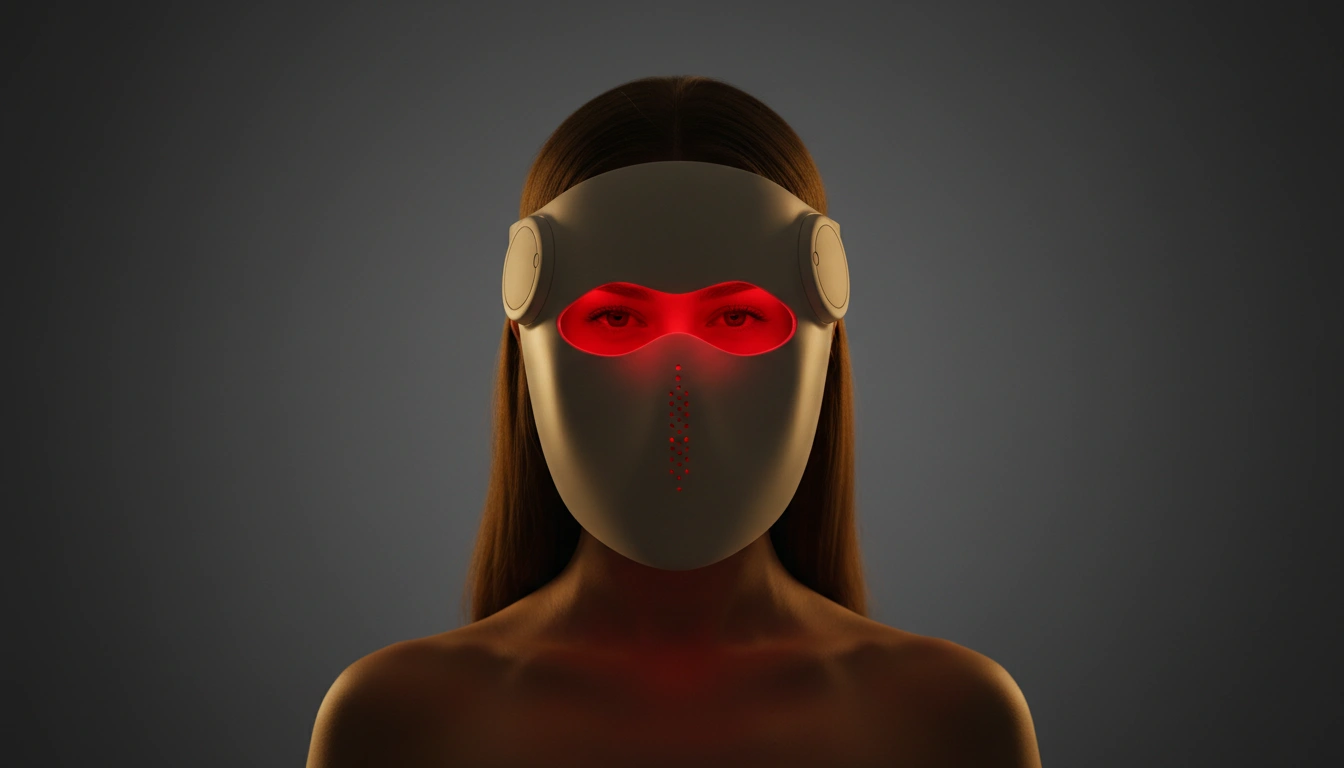
Red light is the most researched and versatile LED colour for skincare. At 630nm, red light penetrates 2-3mm into the dermis where collagen is produced.
What Red Light Does
- Stimulates collagen production: Energises fibroblasts to produce more collagen
- Reduces fine lines and wrinkles: New collagen fills in and supports skin
- Improves skin texture: Smoother, more refined surface
- Enhances circulation: Delivers more oxygen and nutrients to cells
- Accelerates healing: Speeds repair of damaged tissue
Clinical Evidence for Red Light
Studies show red LED light therapy produces:
- 27% increase in collagen density after 12 weeks
- 36% reduction in wrinkle depth
- 155-171% increase in fibroblast activity
Best Uses for Red Light
- General anti-ageing treatment
- Fine lines and wrinkles
- Dull, tired-looking skin
- Sun damage repair
- Post-procedure recovery
Red Light Treatment Protocol
- Duration: 10-15 minutes per session
- Frequency: Daily during transformation phase
- Best time: Evening, paired with anti-ageing skincare
3. Near-Infrared Light (850nm): Deep Tissue Rejuvenation
Near-infrared (NIR) light is invisible to the human eye but delivers powerful benefits. At 850nm, it penetrates 5-10mm—deeper than any visible wavelength.
What Near-Infrared Does
- Stimulates elastin production: Restores skin's "bounce back" ability
- Improves skin firmness: Strengthens deep structural support
- Reduces deep inflammation: Calms skin at cellular level
- Enhances circulation: Boosts blood flow to deeper tissues
- Supports muscle relaxation: Can help with facial tension
Clinical Evidence for Near-Infrared
Research demonstrates:
- 50% increase in elastin production
- 26% improvement in skin elasticity
- Significant reduction in inflammatory markers
- Enhanced wound healing speed
Best Uses for Near-Infrared
- Loss of firmness and sagging
- Mature skin needing deep rejuvenation
- Inflammation and redness
- Skin recovery and healing
- Overall skin vitality
Why Combine Red and Near-Infrared
The most effective anti-ageing approach uses both wavelengths:
- Red (630nm): Builds collagen in the dermis
- NIR (850nm): Stimulates elastin in deeper tissue
- Together: Complete structural rejuvenation from surface to deep dermis
4. Blue Light LED (460nm): Acne-Fighting Wavelength
Blue light operates at the skin's surface, targeting the bacteria that cause acne. At 460nm, it penetrates only about 0.5mm but delivers powerful antibacterial effects.
What Blue Light Does
- Kills P. acnes bacteria: The bacteria that cause inflammatory acne
- Reduces sebum production: Helps control oily skin
- Calms inflammation: Reduces redness around breakouts
- Prevents new breakouts: Ongoing use reduces acne occurrence
How Blue Light Kills Bacteria
P. acnes bacteria produce a substance called porphyrin. When blue light hits porphyrin, it creates reactive oxygen species that destroy the bacteria from within. This is a photodynamic reaction that's lethal to acne-causing bacteria but harmless to your skin cells.
Clinical Evidence for Blue Light
- 55-75% reduction in inflammatory acne lesions
- Significant improvement in acne severity scores
- Reduction in sebum excretion rates
Best Uses for Blue Light
- Active acne breakouts
- Acne-prone skin (prevention)
- Oily skin concerns
- Hormonal breakouts
- Teen and adult acne
Blue Light Treatment Protocol
- Duration: 10-15 minutes per session
- Frequency: Daily during active breakouts; 3-4 times weekly for prevention
- Note: Can be used twice daily during severe breakouts
5. Green Light LED (520nm): Pigmentation and Calming
Green light operates in the middle wavelength range, reaching the mid-dermis. It's less researched than red or blue but shows promising results for specific concerns.
What Green Light Does
- Targets melanocytes: May help with hyperpigmentation
- Calming effect: Soothes and balances skin
- Improves skin tone: Helps even out discolouration
Best Uses for Green Light
- Hyperpigmentation and dark spots
- Uneven skin tone
- Redness and irritation
- Sun spots
Evidence Level
Green light has less clinical research than red, NIR, or blue. While promising for pigmentation concerns, it's not as well-established as the primary therapeutic wavelengths.
6. Yellow/Amber Light LED (590nm): Redness and Sensitivity
Yellow or amber light falls between red and green on the spectrum. It penetrates to shallow-medium depth and has specific applications.
What Yellow Light Does
- Reduces redness: Particularly effective for rosacea-prone skin
- Calms irritation: Soothes reactive skin
- Promotes lymphatic drainage: May reduce puffiness
- Supports healing: Beneficial for sensitised skin
Best Uses for Yellow Light
- Rosacea and persistent redness
- Sensitive, reactive skin
- Post-procedure calming
- Facial flushing
Evidence Level
Yellow light has moderate research support, particularly for vascular concerns and sensitivity. It's often considered complementary to red and blue light therapy.
7. Other LED Colours: Marketing vs Science
Some LED devices offer 7 or more colours. Here's the reality:
Colours with Established Benefits
- Red (630nm): Strong evidence for collagen/anti-ageing
- Near-Infrared (850nm): Strong evidence for elastin/firmness
- Blue (460nm): Strong evidence for acne/antibacterial
Colours with Moderate Evidence
- Yellow/Amber (590nm): Some evidence for redness/calming
- Green (520nm): Some evidence for pigmentation
Colours with Limited Evidence
- Purple/Violet: Often a combination of red and blue
- Cyan: Limited research
- Orange: Limited research
- White: Combination of all colours—less targeted
The 7-Colour LED Mask Reality
Devices advertising 7+ colours are often marketing-driven rather than science-driven. The three clinically validated wavelengths (red, NIR, blue) deliver the most evidence-based benefits. Additional colours add complexity without proportional value.
Focus on devices that deliver the core wavelengths at proper intensity rather than many colours at weak intensity.
8. Combining LED Colours for Maximum Results
Strategic use of multiple wavelengths can enhance results:
Comprehensive Anti-Ageing (Red + NIR)
The gold standard combination for anti-ageing:
- Red light stimulates collagen in the dermis
- Near-infrared stimulates elastin deeper
- Together: complete structural rejuvenation
Anti-Ageing + Acne (Red + Blue)
For those with mature skin and breakouts:
- Blue light addresses acne bacteria
- Red light heals and prevents scarring
- Together: clear skin with anti-ageing benefits
Complete Treatment (Red + NIR + Blue)
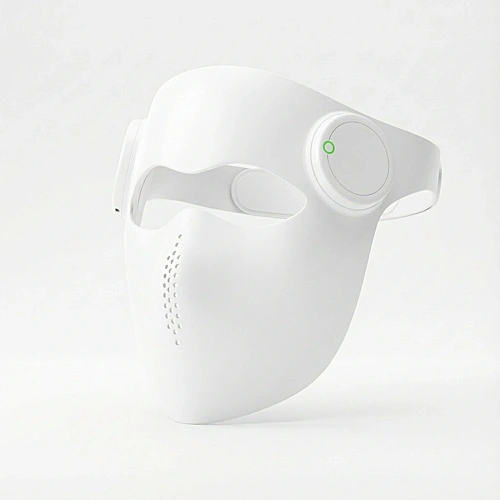
The ICOLUX 2.0 offers all three research-validated wavelengths:
- 72 red LEDs (630nm) for collagen
- 72 NIR LEDs (850nm) for elastin
- 72 blue LEDs (460nm) for clarity
- Modes to use individually or combined
9. Which LED Colour Should You Use?
Choose your primary focus based on your main concern:
Your Main Concern: Fine Lines and Wrinkles
Primary colour: Red (630nm)
Add: Near-infrared for enhanced firmness
Your Main Concern: Loss of Firmness/Sagging
Primary colour: Near-infrared (850nm)
Add: Red for collagen support
Your Main Concern: Active Acne
Primary colour: Blue (460nm)
Add: Red for healing and inflammation reduction
Your Main Concern: General Anti-Ageing
Primary colours: Red + Near-infrared combined
Optional: Blue if occasional breakouts occur
Your Main Concern: Redness/Rosacea
Primary colour: Yellow/Amber if available
Alternative: Red and NIR at lower intensity
Your Main Concern: Hyperpigmentation
Primary colour: Green if available
Support: Red for overall skin health
Conclusion: Focus on What Works
Understanding LED face mask colours helps you use your device effectively. The key takeaways:
- Red (630nm) is the cornerstone for anti-ageing and collagen
- Near-infrared (850nm) provides deep tissue firmness
- Blue (460nm) fights acne-causing bacteria
- Intensity matters more than colour variety
- Three proven wavelengths beat seven weak ones
When choosing an LED face mask, prioritise devices that deliver the core wavelengths at clinical-grade intensity. The Icoskin ICOLUX 2.0 focuses on the three research-validated wavelengths at 50-105 mW/cm²—the specifications that actually produce results.
Don't be distracted by rainbow colour options. Focus on the wavelengths that work, at intensities that matter.
