The Deep Benefits of Near-Infrared Light Treatment
While red light therapy has gained widespread recognition, there's another wavelength working quietly alongside it—one that may be even more transformative for comprehensive skin rejuvenation. Near-infrared light, invisible to the human eye, penetrates deeper into your skin than any visible light can reach, accessing the foundational structures that determine long-term skin health.
In This Article:
1. Beyond the Surface: The Power of Invisible Light
While red light therapy has gained widespread recognition for its collagen-boosting properties, there's another wavelength working quietly alongside it—one that may be even more transformative for comprehensive skin rejuvenation. Near-infrared (NIR) light, invisible to the human eye, penetrates deeper into your skin than any visible light can reach.
At 850 nm, near-infrared light travels beyond the epidermis and dermis, reaching depths of 5-10mm into subcutaneous tissue. This isn't just surface improvement—it's structural restoration at the deepest accessible levels.
"Near-infrared therapy represents the next frontier in photobiomodulation. While red light addresses surface concerns brilliantly, NIR reaches the deep cellular activity that determines how skin ages over time."
2. Understanding Penetration Depth: Why It Matters
Your skin isn't a single surface—it's a complex, layered organ. Different wavelengths of light penetrate to different depths, each accessing distinct cellular populations and triggering specific biological responses.
The Three Key Layers
Epidermis (0-0.5mm): The outer protective layer. Blue light (460nm) works primarily here, addressing surface bacteria and inflammation.
Dermis (0.5-3mm): Where collagen and elastin reside. Red light (630nm) penetrates here, stimulating fibroblasts and collagen production.
Deep Dermis & Subcutaneous Layer (3-10mm): The structural foundation. Near-infrared (850nm) reaches these depths, energising cells that influence overall skin architecture.
This depth of penetration is precisely why combining red and near-infrared light produces superior results to either wavelength alone. You're treating your skin at every level simultaneously—surface refinement and deep structural support working in concert.
3. The Science of Near-Infrared: Cellular Mechanisms
Near-infrared light triggers a cascade of beneficial cellular responses. Understanding these mechanisms reveals why NIR is so effective for comprehensive skin rejuvenation.
Enhanced Mitochondrial Function
Like red light, NIR is absorbed by cytochrome c oxidase in the mitochondria—but its deeper penetration means it energises cells that red light cannot reach. Deep fibroblasts, adipocytes, and stem cells in the subcutaneous layer all benefit from increased ATP production.
Improved Circulation & Oxygenation
NIR light promotes the release of nitric oxide, a molecule that dilates blood vessels and improves microcirculation. Better blood flow means more oxygen and nutrients reaching your skin cells, and more efficient removal of metabolic waste. This enhanced circulation contributes significantly to the "glow" many users report.
Elastin Synthesis Activation
While collagen provides structure, elastin provides resilience—the ability for skin to snap back after stretching or movement. Deep-penetrating NIR stimulates elastin production in ways that surface treatments cannot, addressing the loss of bounce and firmness that characterises ageing skin.
Cellular Repair & Regeneration
NIR light activates genes involved in cellular repair and regeneration. Research has demonstrated upregulation of growth factors and anti-apoptotic (cell-survival) pathways following NIR exposure. Your cells become more resilient and better equipped to maintain themselves.
4. The Elastin Factor: What Most People Overlook
Much of the anti-ageing conversation focuses on collagen—and rightfully so. But elastin, collagen's equally important partner protein, deserves equal attention. Here's why:
- Elastin provides bounce: When you smile and your skin returns to its resting position, that's elastin at work.
- Elastin declines faster: Your body essentially stops producing new elastin in early adulthood. What you have at 25 is largely what you'll have at 60—unless you actively stimulate production.
- Elastin damage is harder to reverse: Unlike collagen, which your body continues producing (albeit at reduced rates), elastin repair requires specific stimulation that topical products cannot provide.
- Deep elastin matters most: The elastin network in your deep dermis provides foundational support. This is precisely where near-infrared light reaches.
Studies show that near-infrared exposure can increase elastin production by up to 50% in treated tissue. This is one of the few non-invasive methods proven to stimulate elastin synthesis in the deep dermis.
5. Six Transformative Benefits of Near-Infrared Therapy
Enhanced Skin Luminosity
Improved circulation and cellular energy production creates an unmistakable radiance. Light genuinely reflects differently from healthy, well-oxygenated skin.
Improved Elasticity
Deep elastin stimulation restores the bounce and resilience that diminishes with age. Skin responds better to movement and expression.
Accelerated Healing
Enhanced cellular repair means faster recovery from environmental damage, minor injuries, and post-treatment healing times.
Reduced Inflammation
NIR has powerful anti-inflammatory effects, calming chronic low-grade inflammation that accelerates skin ageing.
Increased Cellular Energy
More ATP production means more efficient cellular function across all skin processes—from repair to regeneration to defence.
Improved Skin Density
Combined collagen and elastin stimulation creates denser, more substantial skin structure visible to the touch and eye.
6. Near-Infrared vs. Red Light: Complementary, Not Competing
Understanding the relationship between these wavelengths helps clarify why premium LED devices include both—and why devices offering only red light may be leaving results on the table.
Red Light (630nm)
- Visibility: Visible (red glow)
- Penetration: 2-3mm (dermis)
- Primary Target: Surface collagen, fine lines
- Key Benefits: Wrinkle reduction, texture, tone
- Ideal For: Fine lines, surface concerns
Near-Infrared (850nm)
- Visibility: Invisible
- Penetration: 5-10mm (deep dermis/subcutaneous)
- Primary Target: Deep elastin, cellular energy, circulation
- Key Benefits: Elasticity, firmness, deep rejuvenation
- Ideal For: Loss of firmness, sagging, overall vitality
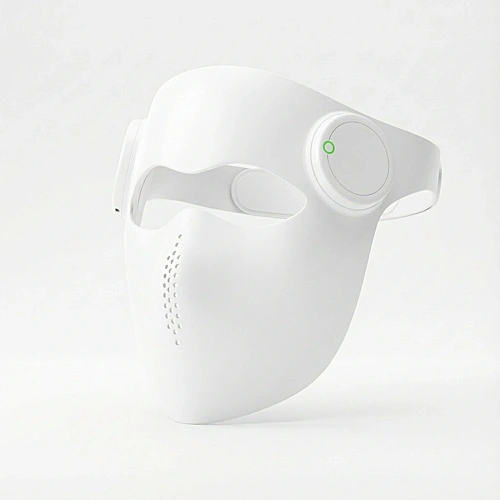
The most effective approach combines both wavelengths in each treatment session. The Icoskin ICOLUX 2.0 includes 72 near-infrared LEDs at 850nm alongside 72 red LEDs—ensuring comprehensive treatment at every skin depth.
7. What Clinical Research Reveals
The efficacy of near-infrared therapy isn't speculative—it's supported by rigorous scientific investigation across multiple research institutions.
- +31% increase in collagen density (combined red + NIR)
- +26% improvement in skin elasticity
- -35% reduction in periorbital wrinkles
- 91% participant satisfaction rate
A comprehensive study published in Seminars in Cutaneous Medicine and Surgery found that participants using combined red and near-infrared LED therapy showed statistically significant improvements in skin complexion, texture, and collagen density when measured by objective instrumentation. Importantly, these improvements were sustained months after the treatment period ended—indicating genuine structural change rather than temporary effects.
The Deep Healing Process: What Happens During Treatment
Step 1: Immediate Light Absorption
As near-infrared light contacts your skin, it passes through the epidermis and dermis with minimal absorption, reaching the deep dermis and subcutaneous tissue where it encounters mitochondria in deep fibroblasts and other cells.
Step 2: Photon-Enzyme Interaction
The 850nm photons are absorbed by cytochrome c oxidase, the same enzyme targeted by red light but in cells residing at greater depths. This triggers a cascade of cellular responses beginning with enhanced electron transport chain activity.
Step 3: Nitric Oxide Release
NIR exposure triggers the release of nitric oxide from cells. This signalling molecule dilates blood vessels, improving microcirculation and oxygen delivery. You may notice a subtle warmth during treatment—this is therapeutic, not harmful.
Step 4: ATP Production Surge
Enhanced mitochondrial function produces significantly more ATP—cellular energy. Deep skin cells become more metabolically active, supporting repair, regeneration, and protein synthesis.
Step 5: Gene Expression Changes
Within hours of treatment, genes associated with cell survival, repair, and extracellular matrix production become upregulated. Your cells are literally changing their behaviour in response to light stimulation.
Step 6: Structural Protein Synthesis
Over subsequent days, activated fibroblasts produce new elastin and collagen. These proteins integrate into your skin's structure, gradually improving density, elasticity, and resilience.
8. Common Questions About Near-Infrared Therapy
If NIR light is invisible, how do I know it's working?
While you cannot see 850nm light, you may feel a subtle, pleasant warmth during treatment as circulation increases. This warmth indicates therapeutic activity. The Icoskin device includes red LEDs that produce visible light, confirming the device is operating—the NIR LEDs work simultaneously but invisibly.
Is deeper penetration safe?
Absolutely. Unlike UV radiation, near-infrared light doesn't damage DNA or cause harmful cellular changes. It's the same spectrum of light present in natural sunlight—but isolated and concentrated for therapeutic benefit without UV exposure. NIR has been safely used in medical applications for decades.
Can NIR therapy help with sagging skin?
Yes—this is one of NIR's primary strengths. By reaching the deep dermis where structural support originates, and by stimulating both elastin production and cellular energy in this region, NIR addresses sagging at its source. Results require consistency, but many users report improved facial contours over 8-12 weeks of daily use.
Should I choose red light OR near-infrared?
Ideally, both. Red light excels at surface improvements—fine lines, texture, tone. Near-infrared addresses deeper concerns—elasticity, firmness, overall skin vitality. Using both wavelengths provides comprehensive treatment at every skin depth. This is why the Icoskin ICOLUX 2.0 includes equal numbers of each wavelength.
How long until I see results from NIR?
Initial improvements in skin luminosity and texture often appear within 2-4 weeks. Deeper structural benefits—improved elasticity, firmness, reduced sagging—typically become noticeable between weeks 6-12. Continued use produces ongoing improvements as elastin and collagen networks strengthen over time.
The Icoskin Advantage: Clinical-Grade NIR at Home
Many consumer LED devices either omit near-infrared entirely or include underpowered NIR LEDs as an afterthought. The Icoskin ICOLUX 2.0 was engineered with NIR as a core component:
- 72 dedicated 850nm LEDs: Equal representation to red light, ensuring balanced deep and surface treatment
- Clinical-grade intensity: 50-105 mW/cm² irradiance that actually reaches therapeutic depths
- Medical-grade components: LEDs selected for wavelength precision and sustained output over time
- Full-face coverage: Every facial zone receives consistent NIR exposure
- Rigid design: Maintains optimal distance for predictable deep-tissue energy delivery
The difference between therapeutic NIR and decorative NIR is intensity and precision. The ICOLUX 2.0 delivers the former—the kind that produces measurable biological change, not just specification sheets.
Conclusion: Unlock Your Skin's Inner Radiance
Near-infrared light represents the deeper dimension of LED therapy—literally and figuratively. While red light addresses what you see in the mirror today, NIR works on the structural foundation that determines how your skin will age tomorrow. The elastin networks, the deep fibroblasts, the circulatory efficiency that keeps skin vital and responsive.
This isn't about choosing between wavelengths—it's about understanding that comprehensive skin health requires treatment at every level. Surface and deep. Visible and invisible. Collagen and elastin. The Icoskin approach incorporates both because that's what the science demands.
Your skin's inner radiance isn't a metaphor. It's the result of well-oxygenated, energised cells functioning at their best—supported by a robust structural matrix of collagen and elastin that only deep-penetrating light can stimulate. Near-infrared makes this possible.
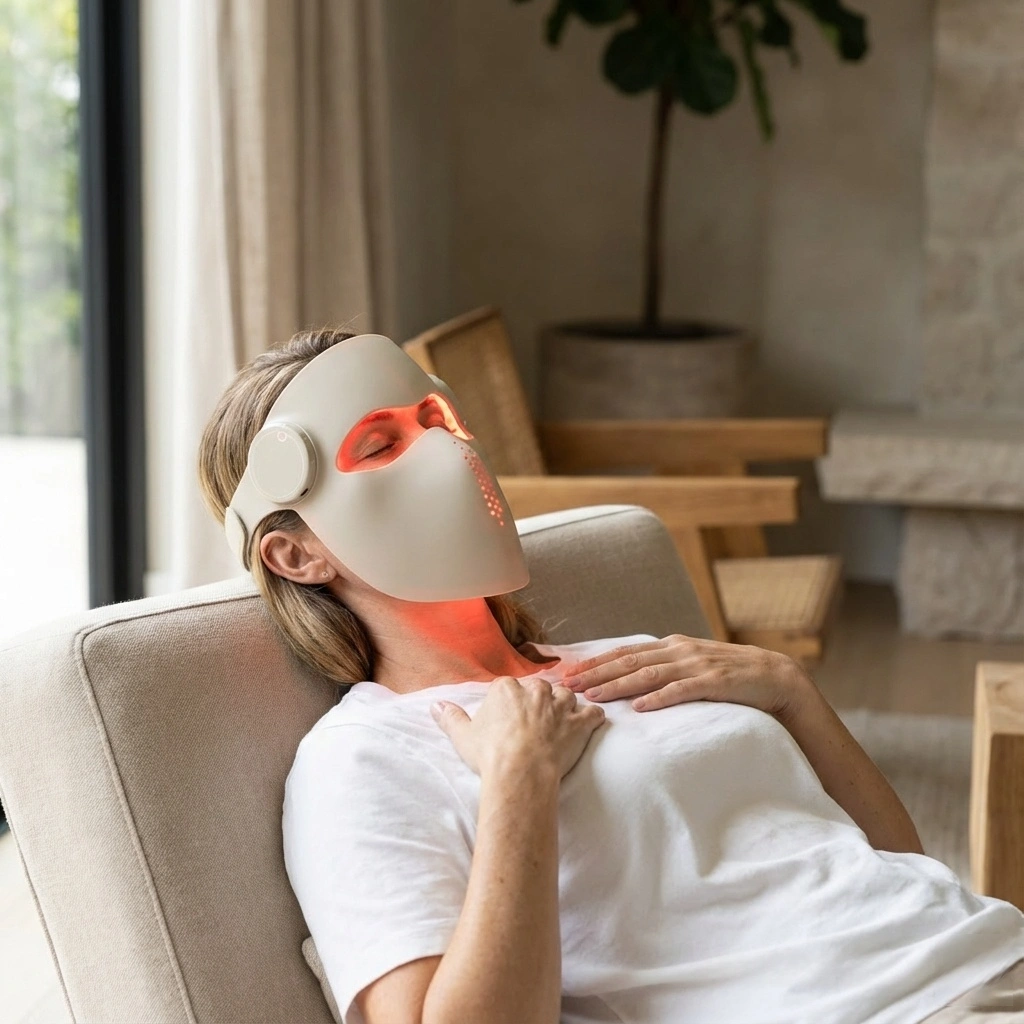
Fifteen minutes daily. Every wavelength your skin needs. The radiance that comes from true cellular health, not just surface shimmer.
